On Saturday the 4th July, the GEO 600 gravitational-wave detector in Hannover, Germany held its final public open day ahead of its closure at the end of this year. As a student of both Glasgow and Cardiff universities, who played major roles in the research conducted with GEO 600, and as a member of the GEO collaboration, this detector is very close to my heart. So I made the journey to Hannover to pay my respects and say goodbye from all of us at Glasgow (dressed in black, of course!).
The Open Day
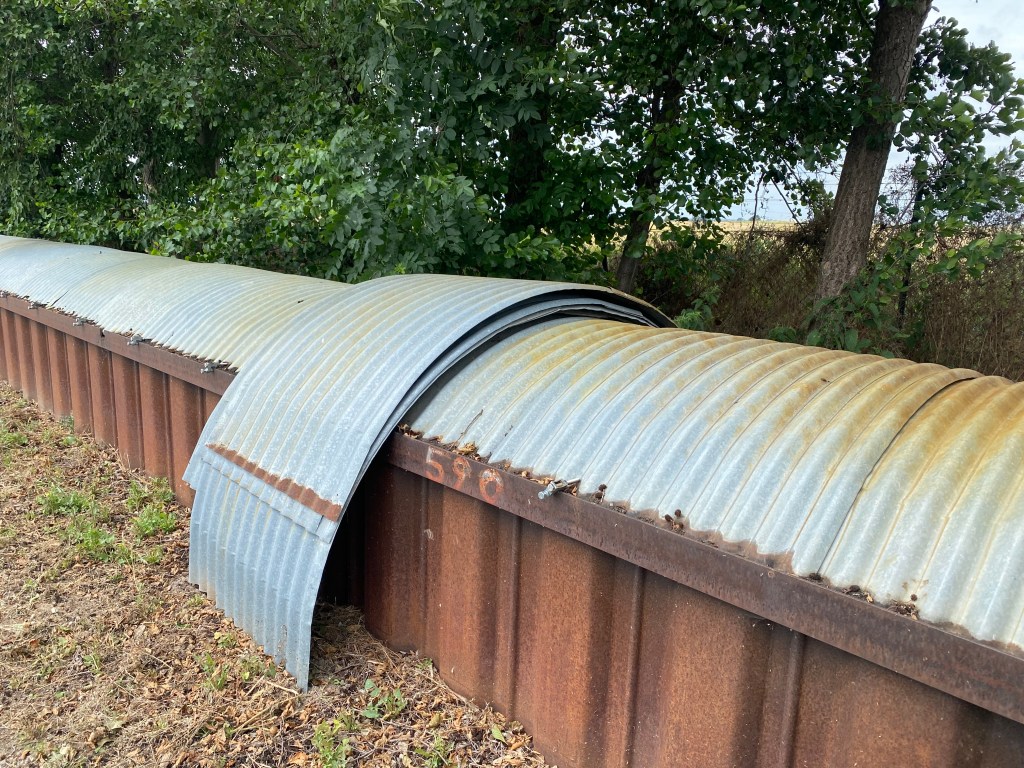
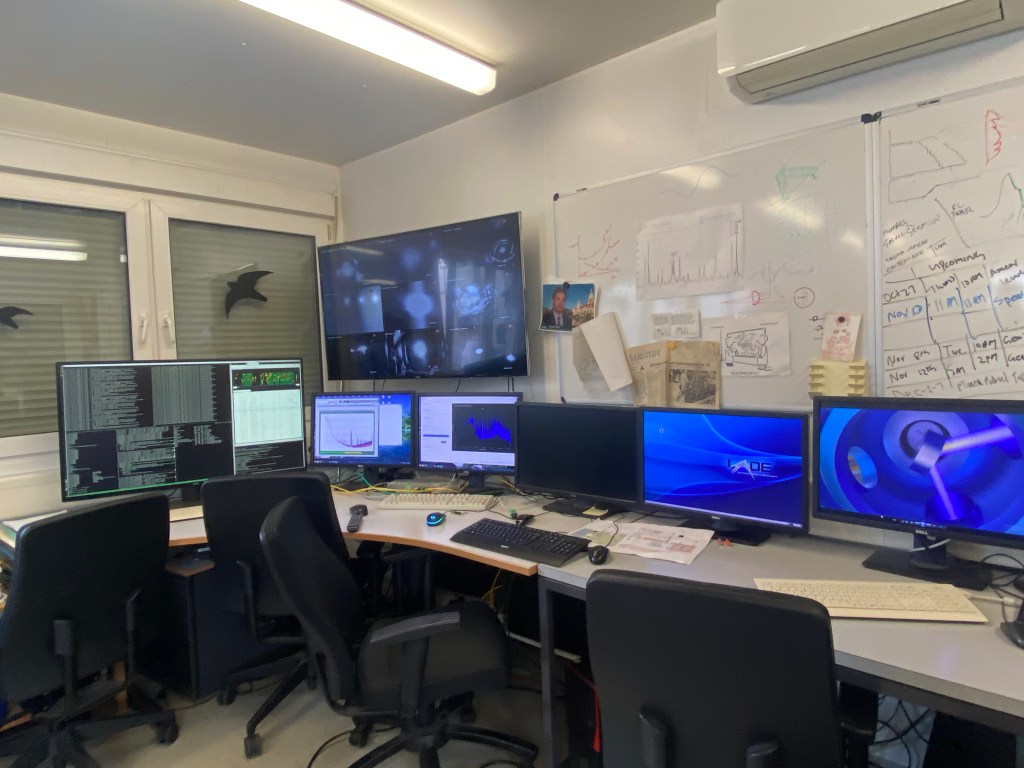
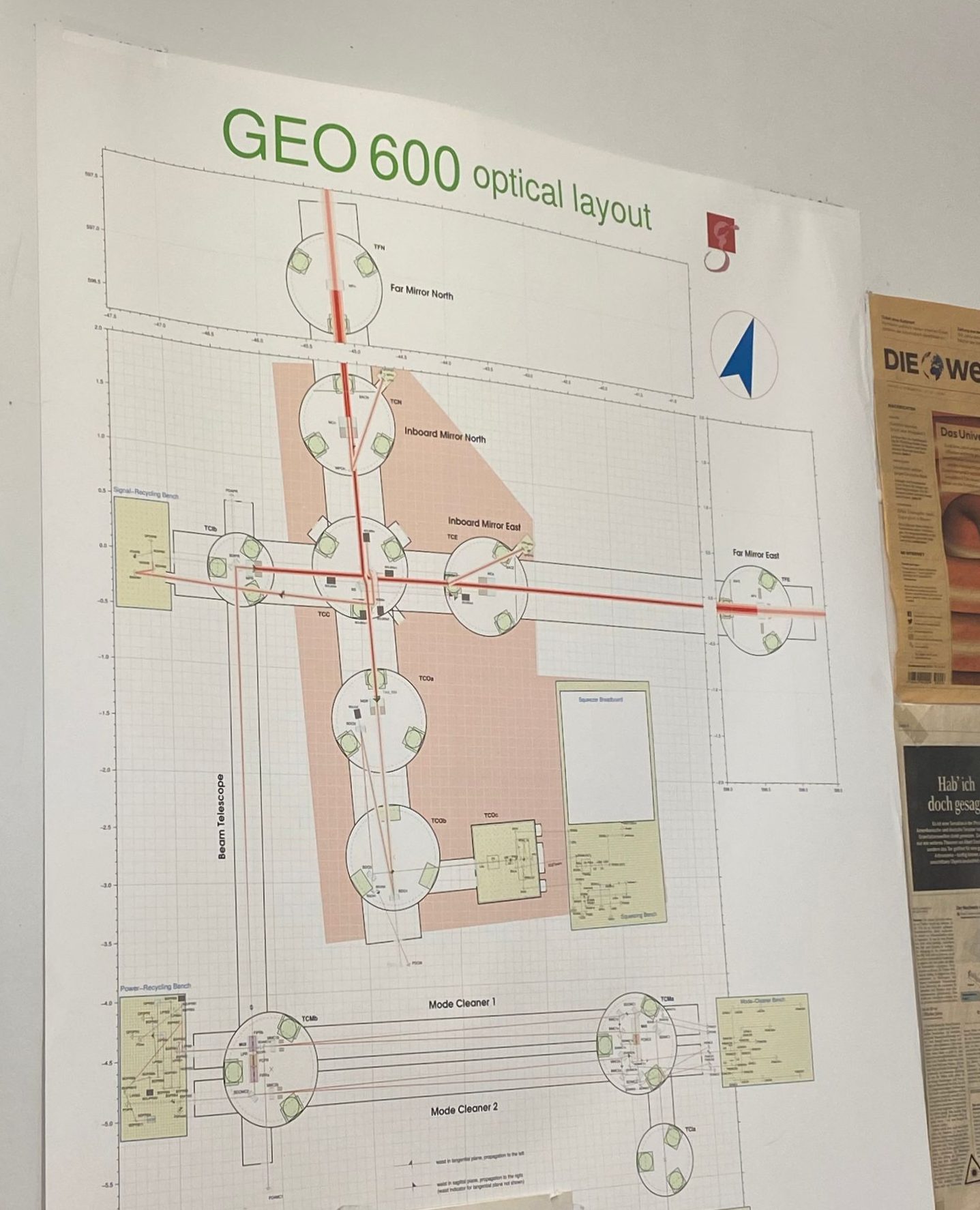
The final public open day was a fitting farewell to the detector. I was pleasantly surprised by the crowds of people that had made their way to GEO 600. We were greeted by scientists explaining all aspects of gravitational-wave research from the Einstein@Home project to future space-based missions such as LISA and I picked up my fair share of postcards and stickers to display in the office. The highlight of the open day, however, was the tour that took us onto a viewing platform above the detector where we could see into the heart of the interferometer. Here, the tour guide talked us through the path of the laser and showed us one of the mirrors. We finished the day with a talk held in the control room before we walked down all 600 m of the east arm, following the laser down to the end station and bidding our final goodbyes to GEO 600.
GEO 600
GEO 600 was born when researchers from Germany and the UK decided to join forces to build a gravitational-wave detector in 1989. Originally GEO was planned to be a 3 km interferometer, similar to Virgo in Italy, but due to funding issues, it was downsized to 600 m instead. Construction began in September of 1995, 20 km south of Hannover, and was completed in 2001. While intended to be the case, GEO 600’s arms are not truly perpendicular to each other, instead they are slightly less than 90 degrees apart. To be perpendicular, the east arm needed to pass through a neighboring field but the owner would not give permission for their land to be used. A similar story nearly happened with the north arm but a gift of a bottle of fine Schnapps saved the day!
Once construction was completed, GEO 600 joined the LIGO Hanford and Livingston detectors during their first science runs from 2002-2009. GEO 600 has also participated in all four of the LIGO-Virgo-KAGRA observing runs and was operated alongside the Japanese KAGRA detector for two weeks in 2020 during the O3GK observing run. GEO 600 has been a part of gravitational-wave detection from the very beginning, and while it has never detected a gravitational wave itself, it has played a very important role in their detection.
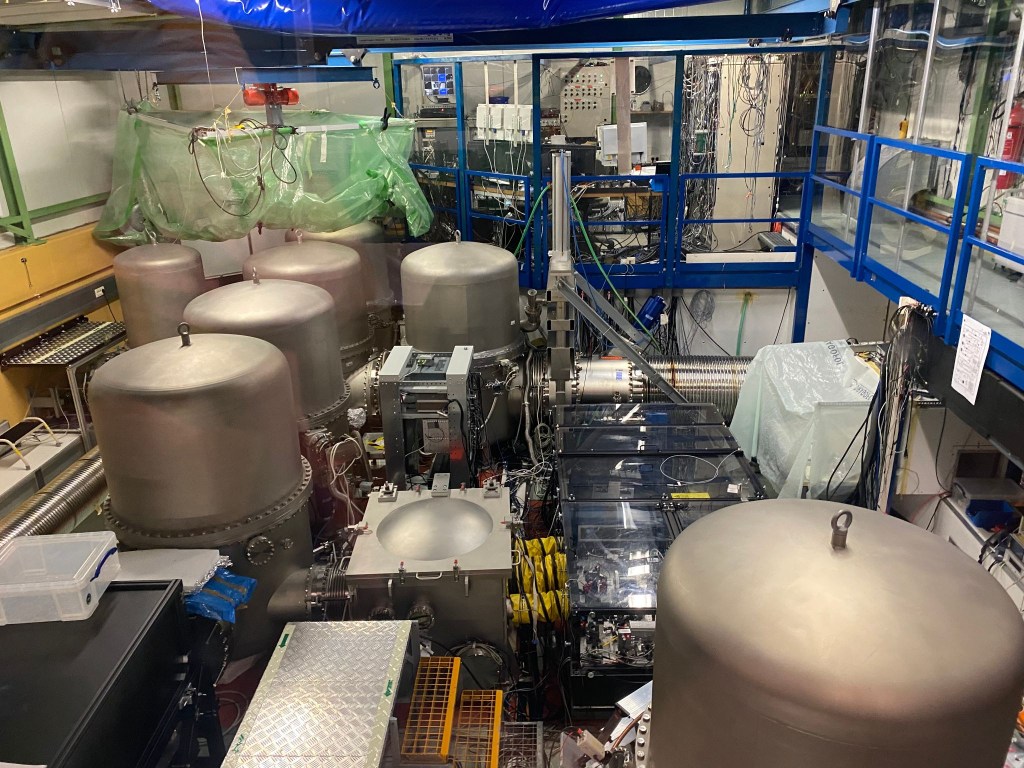
Due to its shorter arm length, GEO 600 would never be as sensitive as its larger American, Italian and Japanese cousins in the frequency range we typically use to search for gravitational waves (more on this later) but its part in gravitational-wave detection has been invaluable, serving as a test-bed of new technologies that live inside the LIGO and Virgo detectors today. It was in GEO 600 that optical squeezing was first performed, a method to surpass the fundamental sensitivity limit nature puts on gravitational-wave detectors due to the quantum nature of light. Another key technology that started life at GEO 600 is signal recycling: adding a recycling mirror between the beam splitter and output of the interferometer, further improving the sensitivity of the detector and allowing us to tune it to specific frequencies of gravitational waves.
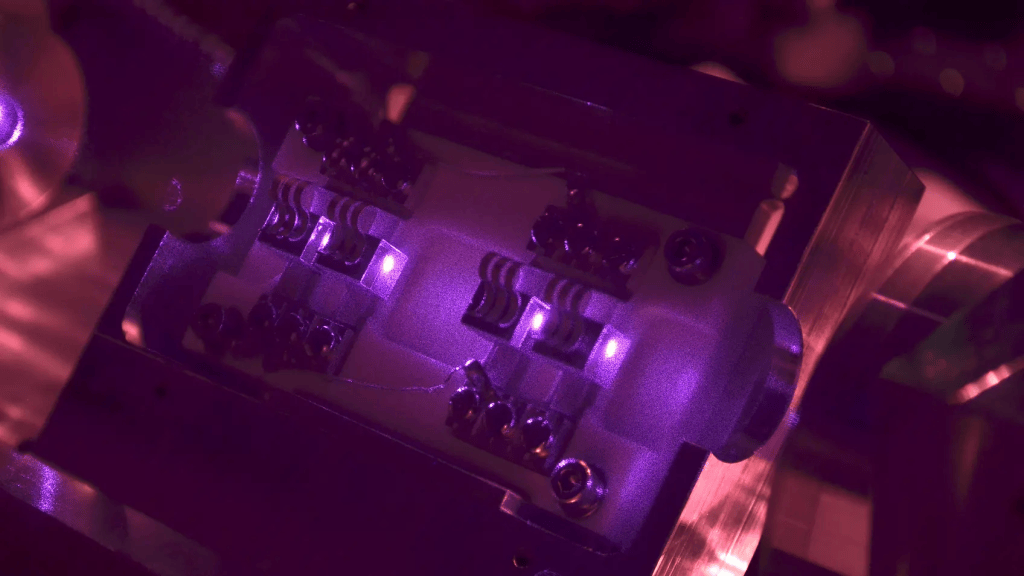
Since 2025, GEO 600 has continued the search for gravitational waves, but turning its focus to very high-frequency waves. Previously, detectors have searched within a frequency range of 10–6000 Hz but using the tuning provided by the signal recycling mirror and with a new laser amplifier and upgraded data acquisition systems, GEO 600 is looking for waves at frequencies of up to 2 MHz (2,000,000 Hz), something that simply cannot be done with the current set up of the LIGO, Virgo or KAGRA detectors. Researchers believe that these very high-frequency waves could be emitted from sources we have yet to detect such as sub-solar-mass compact objects or possibly mergers of light black holes that were formed in the very early universe, known as primordial black holes or even the result of a merger, as was looked for after GW170817. GEO 600 will continue searching for these high-frequency waves until the 31st of December of this year before it is shut down for the last time.
I think a brand-new discovery would be a very fitting swan song for GEO 600 in its final moments, so I’m keeping my fingers crossed. Either way GEO 600’s legacy and the impact it has had on gravitational-wave astronomy will not be forgotten.
We will miss you GEO 600.
Happy classifying,
Elizabeth 🕵️♀️


Leave a Reply